Bihar, a historic state situated in the eastern part of India is known worldwide for its glorious past. However, due to its geographical location and its social structure, Bihar could not achieve the desired developmental momentum. Internalising the contextual reasons for Bihar’s backwardness, the Government of Bihar prioritised in conceptualising an all-encompassing and comprehensive program for poverty alleviation.
The Government of Bihar with the financial assistance of World Bank launched an ambitious poverty alleviation project on 2nd October 2006. “Bihar Rural Livelihoods Promotion Society” popularly known as “JEEVIKA” was constituted and registered under Societies Registration Act 1860. The guiding principle of the program entailed promotion of a three-tier community architecture with “Self-Help Group” as the primary, “Village Organisation” as secondary and “Cluster-Level Federations” at the tertiary level institutions. The program aimed at economic and social upliftment of the rural poor and facilitate them to emerge self-reliant. The program centred around the women of the poor rural families and mobilising them into the three-tier community architecture begun.
At the time of initiation of JEEVIKA, the state’s rural poverty ratio was 44.3 percent, second highest after Odisha in 2006. Prior to the inception of JEEVIKA, several governmental and non-governmental initiatives for poverty alleviation were being executed, under which self-help groups were being promoted. JEEVIKA initiated promotion of self-help groups in 5 blocks of 5 districts of the state. The first Self-Help Group was promoted in the Damdaha Block of Purnea district on 12th December 2006. The success instilled added vigour amongst the community and employees and consequently, in 2007-2008, women from the 18 blocks of 6 districts of the state showed their faith and believe in the initiative and formation of Self-Help-Groups started picking up momentum. The ‘socio-economic development model of rural poor households” made the program unique.
JEEVIKA’s Aims and Objectives
JEEVIKA aims at social and economic empowerment of the rural poor through
- Creation of self-managed community institutions
- Ensuring livelihood security
- Ensuring food security
- Convergence with Social Security & safeguards,
- Providing funding in schemes related to government endowments
Important components of JEEVIKA
- Institution and capacity building
- Financial inclusion
- Livelihood promotion
- Social development
- Health, Nutrition & Sanitation
- Skill development
An Executive Committee and a General Body headed by the Development Commissioner; Government of Bihar was constituted as apex governance bodies for successful implementation of the program. The Executive Committee comprised of Principal Secretaries and Secretaries of various departments of Government of Bihar, CGM-NABARD, Executive Director-PRADAN and representatives of leading non-governmental agencies in the state. A senior Indian Administrative Service officer was nominated as the Chief Executive Officer of JEEVIKA. Further, offices at the state, district and block levels manned by subject matter experts were set up for the implementation, coordination, monitoring and management of the program.
More than 6800 committed employees are active till village level for successful implementation of JEEVIKA. Apart from this, more than 200 young professionals graduated from premier institutions of India are contributing in the program. JEEVIKA has engaged experienced professionals and experts to connect with the community for the development of rural Bihar. These specialists work within the community and execute their tasks by applying their expertise.
Besides promoting Community Based Organizations, JEEVIKA has also identified and nurtured community professionals to provide various services at the doorsteps of the community. These community professionals are selected by the Village Organizations and these organisations monitor and supervise the activities of the community professionals- JEEVIKA mitra, book-keepers, community resource persons, village resource persons, bank mitra, pashu sakhis & job resource persons. JEEVIKA provides technical support to the village organisations in managing the affairs. The community professionals support the community-based organisations in conducting SHG meetings, bookkeeping, agriculture extension services, capacity building of the community organisations and banking services. Presently, 1.35 lakh community professionals are working in the community organizations.
Expansion of JEEVIKA
In the year 2012-13, the program was expanded in the remaining 60 blocks of six districts of the first phase, three blocks of 12 other districts and one block each of the remaining 17 districts. Gradually the program was expanded to other 366 blocks in the year 2013-14. At present, JEEVIKA is working in all 534 blocks of the 38 districts of the state and is continually striving for the holistic development of rural women of Bihar.
The Journey of moving towards 11 Lakh Self-Help Groups
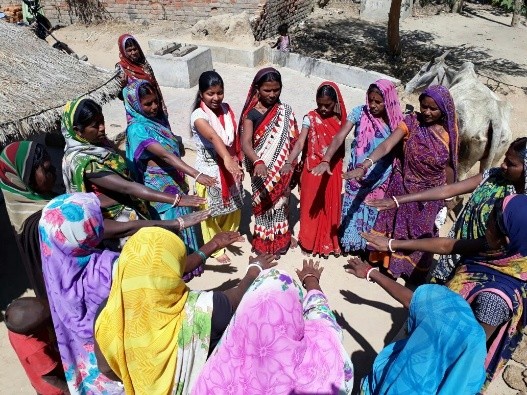
In order to achieve its objective, JEEVIKA has mobilised rural women into strong community organizations such as self-help groups, village organizations and cluster level federations since its very inception. JEEVIKA promoted its first self-help group in the year 2006 at Dhamdaha block of Purnea district, whereas the first village organization (VO) was promoted in the year, 2007 at Bodhgaya block of Gaya district. The first Cluster Level Federation (CLF) came up at Bodh Gaya in 2011.
The journey of continuous promotion of Self-Help Group by collectivising women reflects a transformation over the past two decades. Beginning in 2007 with just 100 SHGs, the initiative witnessed steady progress in the early years, reaching around 25,000 groups by 2010. The momentum picked up between 2010 and 2014, as the number of SHGs expanded rapidly, crossing the 1 lakh mark by 2013 and 2 lakhs by 2014 showing growing acceptance of the model at the grassroots. The community started placing its trust on the self-help groups and raised awareness about SHGs. On one hand the women were becoming strong with the SHG movement, on the other hand, the SHGs were acting as a platform to support in performing socio-economic activities which inspired people to join the movement. This phase was focused on building institutional structures and creating awareness among rural women.
The success of the JEEVIKA model attributed to the Government of Bihar’s decision to incorporate SHGs promoted by other organizations like WDC, Mahila samakhya, SGSY etc. in JEEVIKA fold. JEEVIKA adopted 89,000 self-help groups in its fold from other organizations and trained them on operating systems of Community Based Organizations as per JEEVIKA’s norms. It has formalized in addressing the women in SHGs as “JEEVIKA Didi” which helped in creating a harmony and sense of belongingness
The most significant acceleration came between 2014 and 2018, where JEEVIKA officials and community professionals helped in expediting the pace of SHG formation and as a result the number of SHGs crossing 5 lakhs in 2016 and reaching nearly 8 lakhs by 2018. This surge was backed by policy support, strong cadre systems, and the trust of rural women in collective institutions. Year 2020 was a historic milestone moment when JEEVIKA reached to 10 lakh SHGs establishing itself as one of the largest women’s movements not only in the country but also worldwide. Since then, the pace of growth has stabilized, with the focus shifting from expansion to strengthening quality, livelihoods, and enterprise promotion.
Social mobilization campaigns in 2022 reached left-out households, and from FY 2025, all eligible PDS card holders are being included in SHGs as result. Till now, JEEVIKA has mobilized more than 1.80 crore families in 11.82 lakh SHGs, symbolizing a powerful story of women’s empowerment in Bihar. The women in these SHGs have become strong enough and have been constituting village organizations and cluster level federations.
Social Inclusion
Financial Inclusion
Some of the key initiatives undertaken by the project towards its goals of financial inclusion of Community Institutions are summarized below:
- Building collective capacities The program focused on developing strong community led facilitation architecture on ground with locally identified resource persons working as Community Mobilisers and Bookkeepers. As on date over 1.35 lakh Community cadre as Resource Persons are providing accounting services to the community institutions.
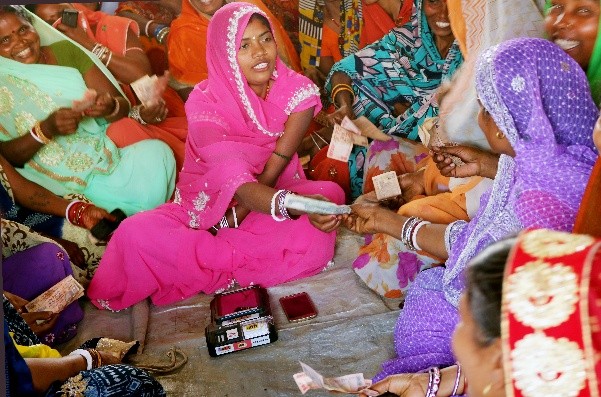 Strong financial management systems For strong financial management at the community level, simplified and uniform Books of Records were introduced at all levels. This enabled the project in standardizing performance measurement systems while ensuring desired rigour in financial management. The concept of micro planning-an asset and credit assessment tool for groups was introduced. Micro plans were accepted as standard documents as part of credit applications submitted by community institutions. Also, the project instituted large-scale annual audits of the federations, i.e., VOs and CLFs to further strengthen financial management. The audit up to CLF has been started as per NRLM mandate. In this financial year 2025-26 audit of more than 7.31 lakh SHGs, 57593 VOs & 1600 CLF completed for financial management in the community institutions.
- Case study- based training modules- the capacity building approach included case study-based trainings for Book Keeping & Micro planning and simulation of activities practiced at different levels of community institutions.
- Bank Mitra-A familiar helping hand JEEVIKA introduced SHG members as Bank Mitras Community members placed within bank branches to facilitate transactions and act as interfaces between the bank and institutions. It was a major milestone for the programme where informal; non-bank employees were allowed to support community institutions while being stationed within the branch offices. For hitherto unbanked community members, many of who step into a bank branch for the first time ever, the Bank Mitras serve as vital confidence boosters.
- Integrating participatory planning - In order to ingrain the principle of planning and decision making at the level of community institutions, the project promoted the concept of Micro-planning at each level of CBOs. Micro-plans were made mandatory in the process of fund disbursal to the community, thereby promulgating the principles of identification of resources, decision making process for its optimal utilization, generating financial and non-financial needs of the community members, making prioritization in favour of poorest for utilization of resources based on the poverty status of members, presentation of credit requirement to outside stakeholders like banks and giving spurt to the financial management capabilities of the poor people.
- Insurance- To strengthen the entrepreneurial journey of poor women, social and livelihood security is being ensured through insurance coverage. Insurance acts as a safety net, protecting women and their families from financial shocks caused by accidental death or unforeseen events. Extensive efforts have been made for awareness and importance of insurance among Self-Help Group (SHG) members. Women have been motivated to enrol, deposit premium amounts regularly, and understand the claim settlement process. Continuous handholding support helped members access benefits smoothly. In FY-2025-26 under Pradhan Mantri Jeevan Jyoti Bima Yojana (PMJJBY) 8052047 SHG women members have been enrolled while, under Pradhan Mantri Suraksha Bima Yojana (PMSBY) 9111689. A total of 10203 death claims has been successfully settled 130.89 crore has been compensated from insurance company, ensuring timely financial assistance to affected households.
- JEEVIKA in collaboration with various financial institutions trained 6498 Bank Sakhis on technical aspects of operating a Customer Service Centre. These Bank Sakhis are extending financial services in rural areas and they have this far assisted in deposit and withdrawal of Rs 20427 crore. The Bank Sakhis are also earning substantial amount by extending their services. Bank Sakhis have recorded total transaction of Rs 3620 crores till date.
Livelihoods Promotion
Various livelihood promoting activities such as agriculture, dairy, poultry, goat rearing, fisheries, beekeeping, art and crafts and skill development are being undertaken.
Farm activity
Livestock intervention
Non-Farm based livelihoods promotion
- Art & craft - More than 4,100 artisans are mobilized in Producer Groups linked to 17 different art forms across 20 districts in Bihar. These producer groups provide essential finance, training, and marketing support to artisans. To further enhance the financial sustainability of rural women artisans through marketing, design development, and capacity-building initiatives, JEEVIKA established the 'Shilpgram Mahila Producer Company Limited' in 2018. Currently, more than 500 women artisans from the districts of Darbhanga, Madhubani, and Muzaffarpur are stakeholders in Shilpgram. The company sold art and craft products to various buyers. Furthermore, products are being marketed online through platforms such as shop.brlps.in, Amazon, and Flipkart.
- One Stop Facility Centre- OSF Centres are designed as decentralized, accessible service hubs for nano and micro-enterprises. Their core philosophy shifts the paradigm from passive "service delivery" to active "growth enablement." They function as the single point of contact for an entrepreneur, eliminating the need to navigate multiple, disconnected government departments and private service providers at the block level. Under the SVEP umbrella, NRLM–OSF started in year 2022. It has expanded via Phases I and II in 23 blocks of 13 districts. Currently it is operational in 40 blocks in 12 districts, OSF has supported 9,028 enterprises by financing. Total 32.56 crore has been disbursed to these enterprises. Repayment performance is encouraging, with 6,454 enterprises has repaid 5.98 crore. OSF-supported enterprises are spanning over manufacturing, services, and trading e sectors, contributing to economic diversification. This program has enabled 1,745 enterprises to obtain Udyog Aadhaar, FSSAI, or GST registrations. Additionally, over 5,106 enterprise loan proposals have been submitted to banks, strengthening linkages with formal financial institutions.
- Didi-Ki-Rasoi- The "Didi Ki Rasoi" initiative by JEEVIKA aims to expand a community-based canteen model in Bihar. This fully women-owned and operated enterprise creates an ecosystem that ensures the provision of quality and hygienic food. Initially designed to serve patients, doctors, nurses, and visitors, the initiative also generates livelihood opportunities for the rural community. The intervention has now scaled up significantly, with 334 Didi Ki Rasoi units established in division hospitals, subdivisional hospitals, medical colleges, SC/ST, BC-EBC & Minority Welfare -residential schools and police training centre & Bihar police academy.
- Bag Cluster Unit Muzaffarpur- The bag manufacturing cluster located in the Bela Industrial Area, Musahari, Muzaffarpur, exemplifies a successful public-private partnership model in Bihar. Supported by the Department of Industries, JEEVIKA, and corporate partners like M/s Highspirit and M/s RTD Global, this cluster represents a significant collaborative effort. Operating on a plug-and-play model provided by the Department of Industries, 42 JEEVIKA entrepreneurs have established 24 machines in their respective sheds, creating direct and indirect employment for over 1,100 trained workers. The establishment of 42 sheds within the Bag Cluster in Bela, Muzaffarpur, was completed in conjunction with the Industries Department. total revenue generated by these micro-entrepreneurs under this initiative stands at Rs. 1.8 crore.
- Housekeeping and Laundry- JEEVIKA has signed two Memorandums of Understanding (MoUs) to expand its service offerings. The first MoU, signed on 21st December 2023 with the SC/ST Welfare Department, initiated cleanliness services in 87 SC/ST Residential Schools, engaging around 7000 households. The second MoU, signed on 5th February 2024 with the Health Department, extends cleanliness and laundry services to medical college and hospitals, District Hospitals and Sub-Divisional Hospitals. JEEVIKA is operating services at BIMHAS since 2022, establishing it as a training and knowledge hub for these services. Additionally, district teams have conducted assessments of health institutions and SC/ST residential schools to effectively initiate cleanliness and laundry services.
- Didi ka Silai Ghar- - An Memorandum of Understanding (MoU) with Department of Social Welfare (ICDS), the Stitching Unit initiative has emerged as a significant livelihood intervention linking women’s economic empowerment. Under this, women are delivering stitching uniforms for children aged 3–6 years enrolled in Anganwadi Centres across Bihar. Uniforms are distributed twice annually in summer and winter to more than 50 lakh children statewide. A total of 1.09 lakh members has been registered under the stitching program, of which 48,034 members have received structured skill training.
- The Start-Up Village Entrepreneurship Program supports SHG members in establishing small enterprises in non-farm sector. It provides financing through the Community Enterprise Fund and dedicated cadres, such as Committee Resource Persons- Enterprise Promotion (CRP-EP) to provide business support services like business plan development, marketing etc. Initial 12 SVEP blocks in 7 districts have completed the 4 to 5-year program and are transforming. Till fourth phase of SVEP program, 30 blocks have been approved for implementation. Block Resource Centre have been established in all these blocks, and 389 cadres have been trained and are actively working to provide enterprise development support to the SHG members. A total 13489 enterprise business plans have been approved.
- The Micro Enterprise Development (MED) component falls under the Start-up Village Entrepreneurship Program sub-scheme of the Deendayal Antyodaya Yojana – National Rural Livelihoods Mission. The MED scheme aims to support SHGs in establishing micro-enterprises in the non-farm sector. A total of 2,673 enterprises has been financed of worth rupees 3.77 crore across 21 blocks in 9 districts
- • To encourage rural entrepreneurship and promote employment generation in rural areas, a total of 106 families has been provided commercial vehicles under Grameen AJEEVIKA Express Yojna and a total of 32475 families have been provided technical and financial support under Start-up Village Entrepreneurship Programme.
- • In collaboration with the Department of Agriculture 11855 families (490 Producer Groups) have been involved in beekeeping activity. A total of 6740.6 metric tonnes of honey has been produced and marketed through various channels. JEEVIKA honey is also being marketed online (home delivery) and is also available in Khadi mall and other retail shops.
- • In order to ensure supply of good quality products at reasonable rates to women micro entrepreneurs, particularly those involved in operating grocery stores, 143 rural retail marts were made operational. A total of 8000 rural grocery store owners have benefited from the venture and have been able to earn a net profit of Rs 2000 to 3000 rupees per month as additional income.
Skill Development
Social Development
Health, Nutrition and Sanitation
Initiatives are being taken to improve the health and nutrition standards in the rural areas. Health and Nutrition related behaviour change communication materials have been disseminated to 6.50 lakh self-help groups and their families.
- Enterprise Development - Health, Nutrition, and Sanitation (HNS) interventions act as a catalyst for rural enterprise development in Bihar. By promoting behavior change through SBCC, the project creates demand for nutritious, health, and sanitation products. The HNS Enterprise Fund meets this need by empowering women entrepreneurs with capital to set up and run individual enterprises like Nutri Snack Units, Green Grocery Shops, Egg Carts, and Nutrition-Sensitive Farming systems. Doing so not only enhances local availability of key HNS products but also supports sustainable livelihoods, enabling women to become pillars of health and nutrition-oriented economic activity in their regions.
- Sanitary Napkin Production Unit SNPU) in Chausa, Buxar, which produce biodegradable sanitary pads, generating awareness around menstrual hygiene, creating employment for rural women and being environmentally sustainable.
- Balahar production unit in Samastipur and Bhagalpur advocates for locally sourced, nutrient-rich supplement for children, supporting child nutrition and complementary feeding practices.
- Profit making Pradhan Mantri Bhartiya Janaushadhi Kendras (PMBJK), operated through CLFs in three districts Gopalganj, Nalanda, and Sitamarhi, provide affordable generic medicines, reduce the medical expenditure of households while also creating livelihood opportunities for SHG members. Collectively these group enterprises not only propel health, nutrition, and sanitation enterprises but also providing benefits for local entrepreneurs.
- Health help desk- - In collaboration with Health Department, JEEVIKA is ensuring timely and equitable access to healthcare services across 38 districts of Bihar by Health Help Desk Intervention. It is being operating in Sadar hospitals and government medical colleges through Swasthaya Mitra, who provide vital information to both OPD and IPD patients, manages patient records, and facilitates follow-up care. Swasthya Mitra Didis actively assist SHG and non-SHG members by providing information on doctor’s availability, ambulance services, and hospital procedures. Till date, the Help Desk has served over 20.5 lakh patients, handled more than 48,000 calls, and operates across 45 centers with 135 dedicated Swasthya Mitra Didis.
JEEVIKA didis, flag bearers of Self-Help Group Formation
JEEVIKA has been selected as the National Resource Organization for promotion of Community Based Organisation and Health, Nutrition and Sanitation. Presently the JEEVIKA didis from Bihar are deployed in other states who orient, train and build capacities on various activities under National Rural Livelihoods Mission. 12644 community resource persons and 3806 village resource persons have extended their services to other states (Rajasthan, Jharkhand, Uttar Pradesh, Arunachal Pradesh, Uttarakhand) and have generated Rs 112.65 crore as resource fee.
Satat Jeevikoparjan Yojana
Mukhyamantri Mahila Rojgar Yojana (MMRY)