Language and Literature
Hindi is the official language of the state, elegantly complemented by Urdu as the second official language. Beyond this administrative foundation, Maithili (including its dialect Bajjika), Bhojpuri, Angika and Magahi are also widely spoken in the state. Reflecting its profound historical prestige, Maithili is a recognised regional language of India under the Eighth Schedule to the Constitution of India. Furthermore, bridging local traditions with wider linguistic geographies, Bhojpuri and Magahi are sociolinguistically a part of the Hindi Belt languages fold.Today, the cultural resonance of these languages extends far beyond the state's borders, propelled by a vast, global Bhojpuri-speaking diaspora and a thriving regional entertainment industry that continuously revitalizes Bihar's linguistic heritage.
Maithili Language Script Example
Literature
The landscape of Hindi literature in Bihar is a magnificent testament to an intellectual awakening that began taking shape in the mid-to-late nineteenth century. While this literary era was notably marked by the drama Harischandra, penned by Varanasi resident Bhartendu Babu Harischandra, the language truly flourished within Bihar through the profound contributions of regional luminaries such as Raja Radhika Raman Singh, Acharya Shiva Pujan Sahay, Divakar Prasad Vidyarthy, Ramdhari Singh Dinkar and Ram Briksha Benipuri. Bihar’s intrinsic link to the evolution of Hindi prose is brilliantly exemplified by Devaki Nandan Khatri. Born in Muzaffarpur and having spent a portion of his life in Gaya's Tekari Estate, Khatri revolutionized the literary scene with pioneering mystery novels, including Chandrakanta, Chandrakanta Santati, Kajar ki Kothari, and Bhootnath.
Vidyapati (1352–1448) is one of the most famous and loved writers in Bihar's history. People fondly call him Maithil Kavi Kokil, which translates to the 'sweet-voiced cuckoo of Maithili'. He was a highly educated man who wrote beautifully in both the Maithili and Sanskrit languages. He is best remembered today for a beautiful collection of love poems he wrote between 1380 and 1406. These poems focus on the famous divine love story of Radha and Krishna. Most importantly, Vidyapati focuses on Radha's feelings. He shows that her emotions as a woman are deep, rich, and complex. In his poems, he treats Radha and Krishna as true equals, never placing Krishna above her. This respectful and balanced view of love is what makes his poetry so special and timeless.
Vaidyanath Mishra (30 June 1911 – 5 November 1998), best known by his literary pen name Nagarjun, was a prominent Hindi and Maithili poet. Widely revered as Janakavi—the People's Poet—he is recognized as the most significant figure in introducing modernity to Maithili literature. Nagarjun’s writing frequently engaged with the contemporary social and political realities of his time. His well-known poem Bādal kō Ghiratē Dēkhā hai functions effectively as a travelogue in its own right. He was also known for his bold political satire.
Ramdhari Singh (23 September 1908 – 24 April 1974) was an Indian Hindi language poet, essayist and freedom fighter. He has been hailed as a Rashtrakavi. He was born in Simaria (Begusarai). The government honored him with the Padma Bhushan in 1959. His works are mostly of Veer Rasa, although Urvashi is an exception to this. Some of his greatest works are Rashmirathi, Kurukshetra and Parashuram ki Prateeksha.
Phanishwar Nath 'Renu' (4 March 1921 – 11 April 1977) was one of the most successful and influential writers of modern Hindi literature. Renu was born on 4 March 1921 in a small village Aurahi Hingna near Simraha railway station in Bihar. Phanishwar Nath Renu’s Maila Aanchal is widely celebrated as one of the most outstanding examples of a regional novel. The story is deeply anchored in a rural village in Bihar, capturing the distinct identity and atmosphere of the area.
Religion
Hindu Goddess Sita, the consort of Lord Rama is believed to be born in Sitamarhi district in the Mithila region of modern-day Bihar. Gautama Buddha attained Enlightenment at Bodh Gaya, a town located in the modern day district of Gaya in Bihar. Vasupujya, the 12th Jain Tirthankara was born in Champapuri, Bhagalpur. Vardhamana Mahavira, the 24th and the last Tirthankara of Jainism, was born in Vaishali around the 6th century BC.
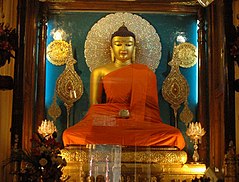
Buddha's statue at Bodh Gaya's temple
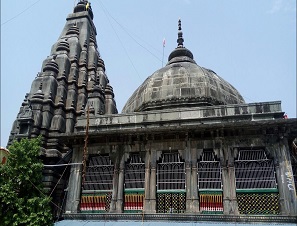
Vishnupadh Temple, Gaya, Bihar
.jpg)
Portrait of Goddess Sita
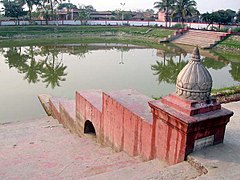
Sita Kund at Sitamarhi, Mithila, Bihar is believed to be the birthplace of Hindu Goddess Sita
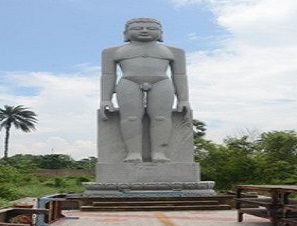
31 feet Statue of Lord Vasupujya, Champapur, Bhagalpur
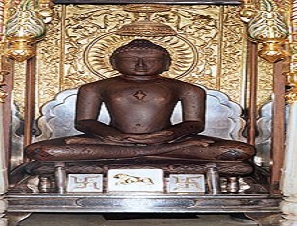
Vardhamana Mahavira
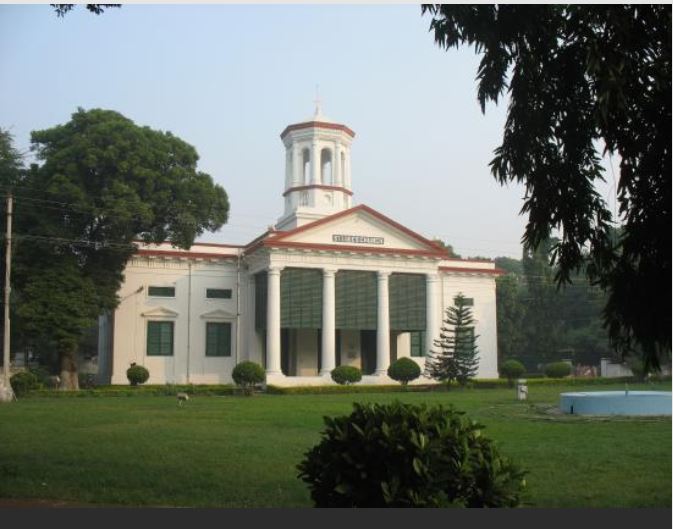
Danapur Church
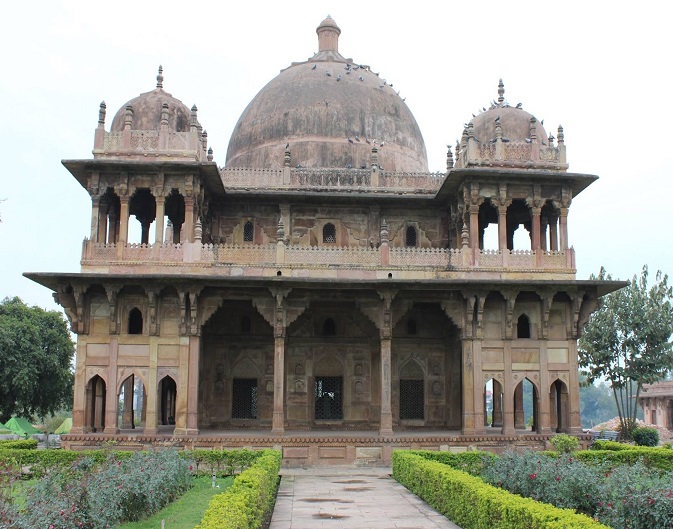
Maner Sharif
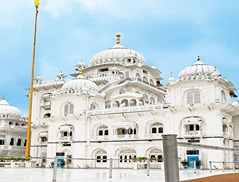
Takhat Sri Harimandir Ji Patna Sahib
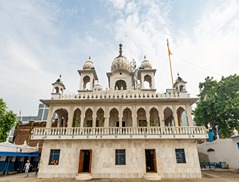
Gurudwara Handi Sahib, Patna
Performing Arts
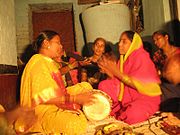
Magahi folk singers
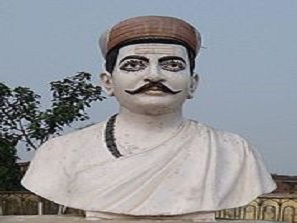
Vidyapati
.jpg)
Bharat Ratna Ustad Bismillah Khan, from Dumraon, Bihar
Bihar possesses a profound heritage of performing arts firmly rooted in the Hindustani classical tradition, having nurtured luminaries such as Bharat Ratna Ustad Bismillah Khan, the eminent Dhrupad vocalists of the Darbhanga and Bettiah Gharanas (the Malliks and Mishras, respectively), and the revered poet Vidyapati Thakur, who significantly enriched Maithili music. The state is distinguished by historic centers of musical excellence like Gaya, which is celebrated for its Tappa and Thumri styles; it is here, according to Padma Shri Gajendra Narayan Singh, the founding secretary of the Sangeet Natak Academi of Bihar, that Pandit Govardhan Mishra—son of the accomplished singer Ram Prasad Mishra—stands as India's finest living exponent of Tappa today. Similarly, the princely estate of Champanagar, Banaili, emerged as a formidable cultural hub under the patronage of Rajkumar Shyamanand Sinha, an extraordinary classical vocalist whose masterful renditions of traditional bandishes earned the admiration of stalwarts like Kesarbai Kerkar and famously moved Pandit Jasraj to tears. Beyond the classical realm, Bihar’s folk arts chronicle the poignant realities of its populace, particularly during the nineteenth-century British misrule that forced numerous citizens to emigrate as indentured laborers to the West Indies, Fiji, and Mauritius. The profound sorrow of this mass displacement gave rise to 'Birha', a genre of melancholic songs and plays in the Bhojpur region that became known as Bhojpuri Birha, and dramas incorporating these moving historical themes continue to be widely popular in the theaters of Patna today.
Cinema
Bihar boasts a robust regional cinema, primarily driven by its prominent Bhojpuri film industry alongside smaller productions in the Magadhi, Maithili, and Angika languages. The state's cinematic journey commenced in the early 1960s, marked by the release of Bhaiyaa (1961), the first Magadhi film, and Ganga Jamuna (1961), which first introduced Bhojpuri dialogue to the silver screen. Entirely Bhojpuri-language cinema was inaugurated a year later with Kundan Kumar’s well-received Ganga Maiyya Tohe Piyari Chadhaibo (1962), paving the way for the historic 1963 release Lagi nahin chute ram, an all-time hit that remarkably surpassed the attendance of Mughal-e-Azam across northern and eastern India. Maithili cinema similarly established its roots during this era with Kanyadan in 1965, a legacy that proudly continued when Mithila Makhaan secured the National Film Award for Best Maithili Film in 2016. Despite the immense popularity of these early regional releases and famous Bollywood productions like Nadiya Ke Paar, as well as profitable ventures such as S. N. Tripathi's Bidesiya (1963) and Kundan Kumar's Ganga (1965), film production largely occurred in fits and starts throughout the 1960s and 1970s. The 1980s, however, witnessed a dedicated revival that supported a sustained industry, yielding notable box office triumphs like Kalpataru’s Hamar Bhauji (1983) and Rajkumar Sharma’s Mai (1989), before the cinematic landscape experienced a significant gap in production during the 1990s.
Famous Personalities in Cinema
Rajgir – Bihar’s Natural Film Studio
Rajgir is not merely a destination; it is an extraordinary experience where nature smiles in its most enchanting form, where history proudly wears its timeless legacy, and where spirituality flows endlessly with serene grace. Surrounded by lush green hills, tranquil valleys, ancient monuments, sacred hot springs, Venu Vana, and modern attractions like the glass bridge and ropeway, Rajgir stands as Bihar’s premier “Natural Film Studio.”
The land here tells timeless stories. Bollywood’s classic Johnny Mera Naam beautifully captured Rajgir’s charm, while several scenes of the acclaimed Gangs of Wasseypur were shot in this region. Rajgir’s breathtaking landscapes and ancient ruins add unmatched depth, emotion, and cinematic brilliance to every frame.
Patna – A Blend of History, Culture, and Cinema
Patna, the capital of Bihar, is a living story woven with history, culture, and deep emotions. Its streets, monuments, and Ganges riverbanks reflect a rich heritage that captivates filmmakers, adding profound meaning, depth, and authenticity to every scene.
Iconic landmarks like the historic Patna Museum and the modern Bihar Museum house rare sculptures, priceless artifacts, and centuries-old treasures in stunning architecture. These venues lend cinematic grandeur and dignity, as seen prominently in the film India’s Most Wanted.
Tourism
Bihar boasts of rich tourism attractions rooted in its profound historical, spiritual, and cultural legacy.
The state is renowned for its Buddhist Circuit, including Bodh Gaya's UNESCO-listed Mahabodhi Temple—where
Lord Buddha attained enlightenment—alongside ancient sites like Nalanda University ruins, Rajgir and Vaishali,
drawing millions of pilgrims annually.
Hindu, Jain, and Sikh heritage thrives in places like Gaya's Vishnupad Temple and Patna's Takht Sri Harimandir
Ji Patna Sahib, complemented by Sufi circuits in Bihar Sharif and Ramayana-linked spots. Ecotourism flourishes
in Valmiki Tiger Reserve and Kakolat Falls, while vibrant festivals like Chhath Puja and the Sonepur Cattle Fair,
paired with Madhubani art and local cuisine such as litti chokha, offer immersive cultural experiences.