Art and Craft
The state of Bihar is rich in its arts and crafts, which is quite evident from the fact that it is home to some of India’s first paintings, including the famous Madhubani paintings and the miniature paintings done on paper and leaves, wall decorations, patchwork, appliqué work and local handicrafts.
Mithila, a region situated to the north of Bihar, is the place where the Madhubani paintings are believed to have originated. These paintings are Bihar’s most unique folk art, done on either paper or canvas by the women of Mithila.
The Miniature paintings make use of leaves or paper and depict the lives of Buddha or Mahavira. They are sold to the pilgrims and tourists in Bodh Gaya and are quite popular.
Madhubani Painting
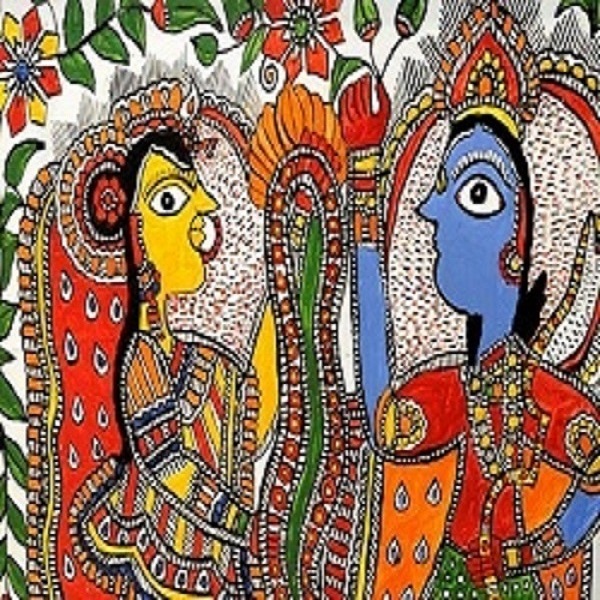
Madhubani painting, also called Mithila Painting, is a traditional folk art of Bihar which has succeeded in creating a place globally. Madhubani painting has been done traditionally by the women of villages around the present town of Madhubani and other areas of Mithila region of Bihar. The painting was traditionally done on freshly plastered mud wall of huts, but now it is also done on cloth, hand-made paper and canvas. The colors used are derived from plants.
Madhubani painting is a traditional Indian art form mostly done by women. Madhubani paintings mostly depict nature and Hindu religious motifs, and the themes generally revolve around Hindu deities like Krishna, Ram, Shiva, Durga, Lakshmi, and Saraswati. Natural objects like the sun, the moon, and religious plants like tulsi are also widely painted, along with scenes from the royal court and social events like weddings.
These paintings were usually made on the eve of important dates, to mark the ceremonies to be performed, like a wedding, festivals, religious events etc. Traditionally, rice ground into paste was used to create these works of art.
Upendra Maharathi Shilp Anusandhan Sansthan is able to mobilise and maintain interest in Madhubani paintings, thus keeping alive a centuries old art form. Today, not only women but also men are learning the Madhubani art of painting.
Manjusha Art
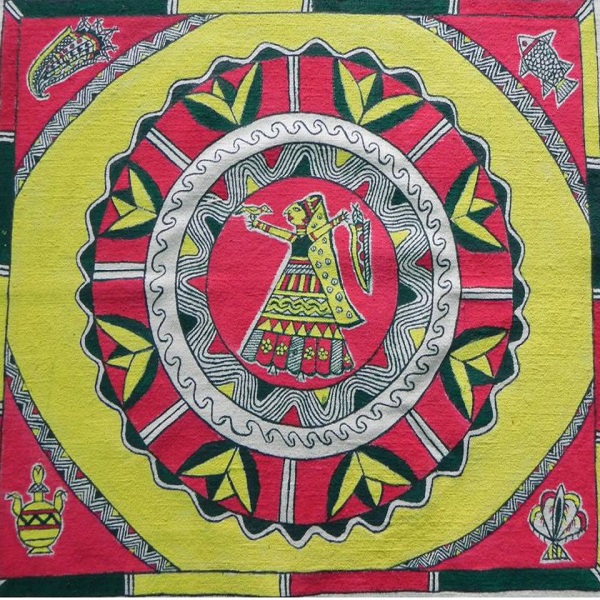
Manjusa art is believed to be the only art form in the history of art in India which has a sequential representation of the story and is displayed in a series. This is also called a scroll painting. Manjusa art is a folk art of Bhagalpur, Bihar, and has been dated back to the 7th century. The name Manjusa is also associated with an elaborate story, a goddess and also a festival celebrated in Bhagalpur. The Sanskrit word “Manjusa” means a box and Manjusas are temple shaped boxes, made of bamboo, jute-straw and paper inside which the devotees keep their ceremonial materials. These boxes are however illustrated with paintings that tell a tale. The tale is that of Bihula who saved her husband from the deity’s wrath and a snake-bite and also of Bishahari or Mansa, the snake goddess known for her anger when displeased but also her fierce protectiveness when propitiated. Earlier the story called ‘Bihula-Bishahari Gatha’ had an oral tradition of being sung though, nowadays not too many people sing it, but in Assam and Bengal the tradition is still continued and the songs are sung with the story of Bihula. It is a well-known folk art.
In an attempt to save this art form from extinction, in the year 1984 the Bihar government made an initiative called “Jansampoorna Vibhag” in which they went to the villages of Bhagalpur and showed them slideshows of Manjusa art and educated people about this traditional art form encouraging them to revive this age old tradition. This initiative has led to other governmental and non-governmental organisations to come up with unique plans to promote this art form by using them as a mode of communication in various schemes.
Patna Kalam
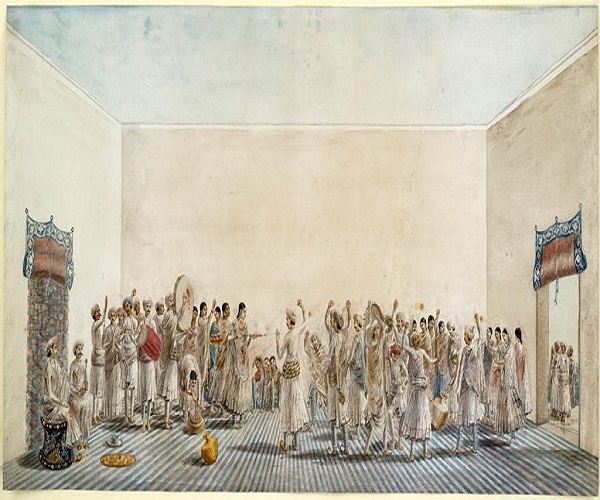
Patna School of Painting or Patna Qalaam (Patna Kalam) or Company Painting is a style of Indian Painting, which existed in Bihar, India in the 18th and 19th centuries. Patna Kalam caught the connoisseurs eye for its clear stylistic difference and unusual use of water colours. For the first time, there was a rich coherence between realism and visual perspective. This style combined elements of the Mughal and British styles of paintings so well, that it was called the Feringhee Kalam (the White man’s art). The paintings were done on surfaces as diverse as paper, mica and even ivory diskettes, that were used as brooches. That it was the world’s first independent school of painting which dealt exclusively with the commoner and his lifestyle also helped Patna Kalam paintings gain in popularity. The subjects of these paintings had always been the common man and his mundane routines. It’s basically a miniature form of painting which has, because of its unique style and form, occupied separate shelves at art galleries in London and museums in Prague.
Tikuli Art
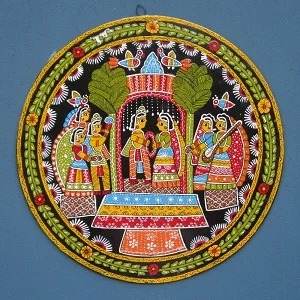
Tikuli art is a highly distinctive and rich traditional art form of Bihar, boasting a glorious history. It is believed that this art originated approximately 800 years ago in the region around Patna. This art form received patronage and encouragement during the Mughal period. In the local dialect, the word 'Tikuli' is used to refer to 'Bindi.' The Bindi is regarded as a symbol of a woman's beauty and intellect. In earlier times, the process of creating a Tikuli was extremely intricate. Glass was melted in a furnace and then cut into the desired shape. Subsequently, it was overlaid with gold or silver foil. Thereafter, images of deities, nature-related motifs and other designs were etched onto it. The creation of a single Tikuli would take approximately seven to ten days. In modern times, Upendra Maharathi and the Padma Shri awardee Smt. Ambika Devi played a pivotal role in bringing recognition to Tikuli art at national and international levels.
Bamboo & Cane Crafts
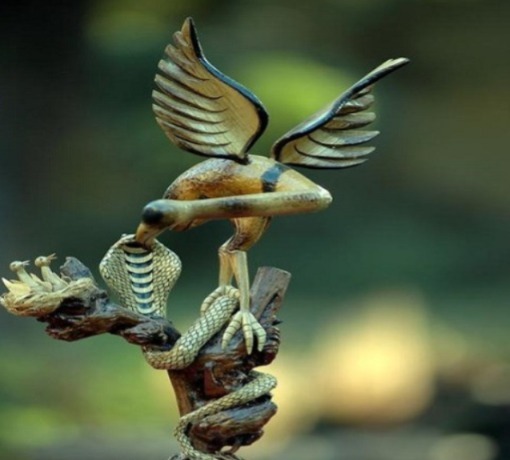
The bamboo and cane crafts of Bihar have a rich historical past that is amalgamated with the preferences of the modern urban people. As Bihar is affluent in the tradition of the powerful dynasties like Magadha Majanapadas, Mauryan Empire and Gupta Empire, the artisans had received encouragement from them. With the introduction of modern technologies the bamboo and cane craft of Bihar has flourished. As the time precedes the tradition of the past and the style of the modern age have developed the cult of the bamboo and cane crafts of Bihar. This has also led to improvements of the products at a high grade with subtle changes.
The bamboo and cane crafts of Bihar have unique features that carry intrinsic beauties and great creativeness offered by the local artisans. Initiated in the prehistoric age, the bamboo and cane crafts of Bihar comprise utility items like baskets, household wares, woven mats, furniture and cane products like cane furniture and other decorative objects. The majority of artisans are the tribal people of Bihar who etch out the lifeless bamboos and canes with dexterity and turn them into exquisite art pieces that are of great value.
The abundant accessibility of bamboo and cane in the areas of Tarai and Bhabhar has aided the bamboo and cane craft of Bihar to reach its zenith. An oldest form of creation of bamboo and cane crafts of Bihar is basketry that is used to serve the purpose of utilitarian item as well as suit other needs. The artisans of Bihar make deft synthesis of Japanese techniques with the Indian tradition and given rise to a complete unique crafts of bamboo and cane. The Bhotiyas, which are the tribal from the Trans-Himalayan region are skilled bamboo and cane artistry. A vast variety of baskets, cups, saucers created by them for local consumption has now found an export market and considering the financial assurance from these crafts the non-tribals are now taking up basket making as their profession too. The designs of these bamboo and cane crafts vary from simple plain weaving or ribbing and sometimes painting the bamboo-strips or cane reed in vivid colors.
The artisans while creating items from bamboo and cane keep in mind about their longevity that follows the style as well. They sometimes use bamboo stems or culms with smaller diameters along with cane in whole or split form for creating a variety of baskets, furniture, mats etc. Large containers are made and these are used widely for storing grain among the local people of Bihar. Apart from these bamboo and cane crafts, Bihar is adored for its creativity in making furniture out of bamboo and cane, woven mats for floors etc.
The availability of raw materials, suitable weather, numerous artisans and land for bamboo agriculture have fastened the growth of the bamboo and cane crafts of Bihar.
Bill-hook, knife and a jak (v shaped wooden frame) are the essential tools required for bamboo craft. Saws, hammers, pliers and pincers in addition to daos and knives are used for making bamboo and cane furniture.
Metal Craft
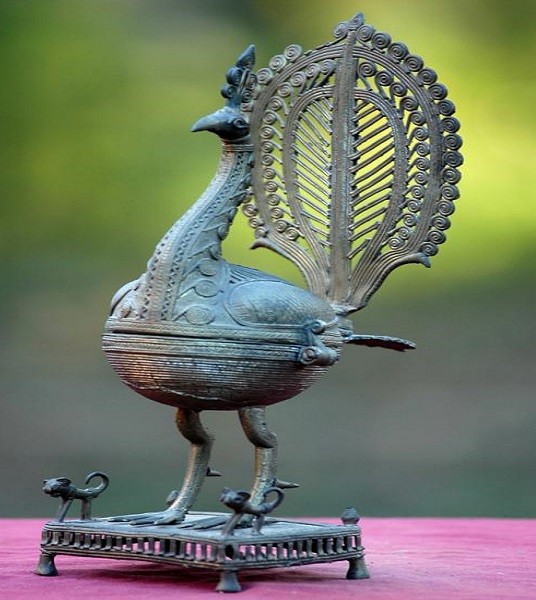
Brass and Bell Metal art is about 300 years old in Bihar. It is popular for decorative items like idols of God-Goddesses, statues and other daily utility items.
Bell metal is a mixture of copper and tin. Wax and wood which are essentially needed for these forest based metal crafts, are naturally available in abundance in tribal areas of Bihar. The craft received patronage from the Royal families, who used to pay the artisans to make idols.
Brass or bell metal craft items are prepared by melting the metal using a lost wax technique. All individuals and group artisans work around their houses or at a common place. Raw materials required for bell metal art are cluster of bees wax, brass metal and fire wood. The raw materials such as wax and metal are purchased from market. The others like clay and fire wood etc. are collected from the nearby forest itself. Artisans use a mixture of wax and resin and also pitch from coal tar.
They mix two kilograms of pitch with 250 grams of resin, melt the two items and strain them separately. Then they mix the two and heat the mixture over fire, stirring it all the while. This process of mixing takes two hours or sometimes more. The mixture is strained again before using. The manner of use of this mixture is identical with that of resin. These artisans are very precise in their work and follow their technique meticulously.
The next step is to wax them. The wax wires are prepared by pure bees wax. The wires are separated and attached with the clay model from its front to back in a round fashion. The whole of the clay image is covered with the wax wires and then they make several designs with these wires. After the desired designs on the image are completed, it is immediately coated again with clay. This time they use local soil added with sand and goat dung. At the time of coating, a hole or an opening is generally kept at the base of the image. The metal is then taken in a container. Generally the metal is brass or bell metal. The container is then covered with a clay cup and is put into the furnace for two to three hours. After that the molten metal is poured on to the image through the opening. Then the mould is kept for cooling. When the mould is cooled then water is sprinkled on the image, which makes the clay coat to crack and break. The metal moulds into the shapes and designs made by the wax wires. Thus at last an artistic bell metal or brass object is ready. The image is then scrubbed with sandy clay to give it shine. Sometimes they are even polished with wet tamarind.
As the Bell Metal products started easily flowing into the external markets, the number of artisans involved in the craft increased and so did the production.
Sikki Craft
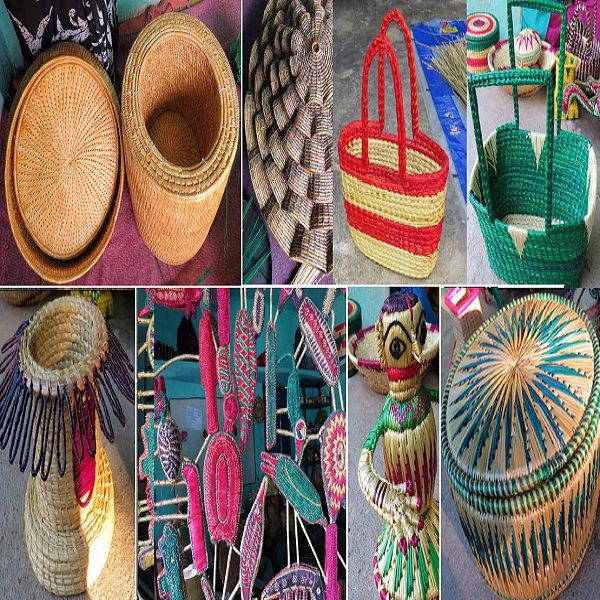
Crafting products, mainly various forms of utilitarian containers, figurines of Gods and Goddesses, and toys, using Sikki grass were an integral part of the living heritage of the women of the part of Northern Bihar, which used to be known as Mithila. This used to be one of the 5 forms of hand crafts that a lady was supposed to be expert in, namely – Painting (this art form has become famous as Madhubani / Mithila painting), embroidery (known as Suzni craft), embroidery (known as Kashidakari), Papier mache craft and Sikki grass work). Before marriage, a girl’s skill in these 5 crafts used to raise her demand as a bride in the village, and products made in these five crafts was to go as a part of the dowry from the girl’s side.
The Sikki grass craft has thus have been existing since hundreds of years, and it is difficult to ascertain exactly how old this craft is. However, as a craft being used for commercial use has been a more recent phenomenon, over the last couple of decades.
Source: Upendra Maharathi Shilp Anusandhan Sansthan & Bihar Tourism Resources